16 Best Shopify Apps for Ecommerce Businesses in 2026
16 min
- Tamsin Mackay
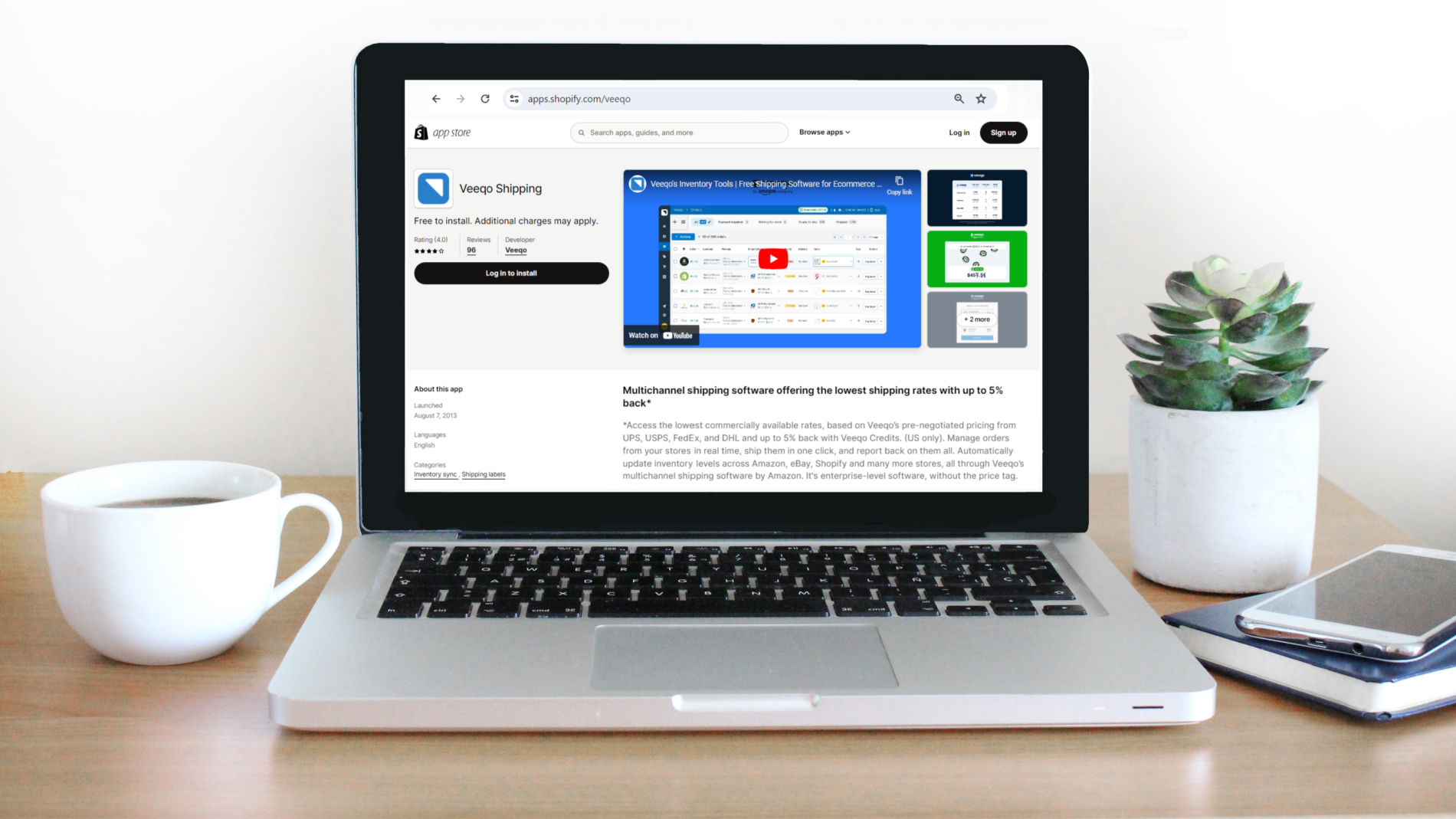
The best Shopify apps solve a specific problem without adding unnecessary complexity to your tech stack.
That might mean improving product discovery, managing customer support, streamlining shipping or understanding which marketing channels are actually driving profitable sales.
There are thousands of options in the Shopify App Store, so choosing the right combination can be difficult. This guide covers 16 apps across marketing, customer experience, retention, operations and analytics.
The best Shopify apps at a glance
The best Shopify apps at a glance
App | Primary use |
Email, SMS and WhatsApp marketing | |
Managing product feeds across advertising channels | |
SEO auditing, image optimization and store performance | |
Bringing ecommerce support conversations into one helpdesk | |
AI phone support for stores with meaningful call volume | |
Collecting and displaying product reviews | |
Improving search and product filtering | |
Building custom landing and product pages | |
Upsells, cross-sells and post-purchase offers | |
Bulk data imports, exports and migrations | |
Multichannel shipping and inventory management | |
Managing returns and exchanges | |
Preorders and back-in-stock alerts | |
Selling and managing subscriptions | |
Loyalty points, referrals and VIP programs | |
Ecommerce analytics and marketing measurement |
How we selected these Shopify apps
We selected each app based on its relevance to Shopify sellers, current feature set, pricing, integration depth and recent customer feedback.
We verified key details against Shopify App Store listings and providers' official documentation, then assessed the use cases, limitations and types of businesses each app may suit.
A note on transparency: This guide is published by Veeqo, an Amazon company. We make shipping and inventory software and offer a Shopify app, so Veeqo is included in this list alongside other apps that may be useful to Shopify sellers. We apply the same research approach to every app, including our own.
App features and pricing were checked October 30, 2026. Prices are in USD unless noted otherwise.
Shopify apps for marketing
Klaviyo
Klaviyo brings customer data, segmentation and multichannel messaging together. Its Shopify integration can use browsing, purchase and customer data to build targeted campaigns and automated flows, including welcome messages, abandoned-cart reminders and post-purchase sequences.
The app now supports email, SMS and WhatsApp, making it a good fit for stores that want to manage several owned marketing channels in one place. It also connects with more than 350 other tools, which can be valuable as a store's tech stack grows.
Key features:
Email, SMS and WhatsApp campaigns
Customer profiles and audience segmentation
Automated flows triggered by customer behavior
Reporting and AI-supported campaign tools
More than 350 integrations
Pricing: The Shopify app's free tier includes up to 250 active profiles and 500 emails per month. Paid email starts at $20/month for 251 to 500 contacts; SMS starts at $15/month for 1,250 SMS/MMS credits. Costs rise with audience and message volume.
Things to consider: Smaller stores with straightforward email needs may not use the full feature set.
Alternative to consider: Shopify Email for stores that want a simpler email tool inside Shopify.
Simprosys Google Shopping Feed
Simprosys helps Shopify sellers submit and optimize product information across Google Shopping, Microsoft Advertising, Meta, Pinterest and other channels. It can reduce the manual work involved in keeping titles, pricing, availability and other product attributes aligned across multiple feeds.
It also supports Shopify Markets features such as multiple languages, currencies and top-level domains. This makes it particularly relevant to stores advertising the same catalog in several countries.
Key features:
Product feeds for Google, Microsoft, Meta and Pinterest
Support for free listings, shopping ads and local inventory ads
Feed rules and product-data optimization
Multi-language and multi-currency support
Diagnostics for feed and account issues
Pricing: Plans start at $4.99/month for up to 500 products, $8.99 for up to 1,000, and $13.99 for up to 5,000. A 21-day free trial is available. AI feed optimization, XML feeds and additional Shopify Markets feeds can add charges.
Things to consider: A feed app can improve data quality and management, but it does not replace campaign strategy or guarantee advertising performance. Merchants still need to monitor each connected advertising account.
Alternative to consider: Google & YouTube by Shopify for a more direct, streamlined connection to Google.
TinySEO
Shopify includes important technical SEO foundations by default, including automatically generated canonical tags, sitemap and robots.txt files, editable metadata and SSL certificates. TinySEO adds a management and optimization layer for merchants who want more help finding issues and applying improvements across a larger store.
The app combines SEO auditing with image compression, alt-text and filename optimization, structured data, broken-link monitoring and store-speed features. This can reduce the manual work involved in checking individual products and pages, particularly for stores with larger catalogs.
Key features:
Technical SEO and store audits
Image compression and optimization
Bulk alt-text and image-filename improvements
JSON-LD structured data
Broken-link monitoring and redirects
Page-speed and lazy-loading tools
Pricing: Free includes 50 image optimizations a month, with extra optimizations at $0.03 each. Paid plans are $14/month for 1,500 optimizations and $23/month for 5,000; additional optimizations cost $0.02 or $0.01 each, respectively. A $49/month Expert tier is also available.
Things to consider: TinySEO is not a substitute for a clear site structure, useful product content, keyword research or authoritative links. Apps that alter structured data or storefront code can also conflict with a theme or another SEO app, so merchants should check existing markup and avoid running overlapping tools.
Alternative to consider: Shopify's native SEO features may be sufficient for stores with small catalogs and the time or expertise to manage optimization manually.
Shopify apps for customer support
Gorgias
Gorgias is an ecommerce-focused helpdesk that brings support conversations into a shared workspace. Agents can handle channels such as email, chat and social messaging while viewing relevant Shopify customer and order information.
The combination of helpdesk workflows and conversational AI can help stores automate repetitive questions and give human agents more context when they take over. It is most useful for teams that have outgrown a standard inbox and need structured routing, macros, reporting and collaboration.
Key features:
Shared helpdesk for multiple customer-support channels
Shopify customer and order context
Rules, macros and automated workflows
Conversational AI and self-service options
Support reporting and team-management tools
Pricing: Starter is $10/month for 50 tickets and three agents, then $0.40 per additional ticket. The Basic plan is $60/month for 300 tickets, then $40 per additional 100 tickets. A 7-day free trial is available; higher tiers cost more.
Things to consider: Very small stores may be adequately served by Shopify Inbox and a shared email account.
Alternative to consider: Zendesk for businesses that need a broader service-management suite beyond ecommerce.
Ringly
Ringly is an AI phone support app built for ecommerce brands. It can answer calls about products, orders, returns and store policies using information from a merchant's Shopify store, website and supporting documents. Calls that need human judgment can be transferred or flagged for follow-up.
The app also provides call history and reporting. It is most relevant to established stores receiving enough customer calls to justify a dedicated voice-support tool.
AI phone support works best when it has clear product, policy and order information to draw from. Merchants should review how calls are handled, define appropriate escalation routes and monitor conversations rather than treating the setup as entirely hands-off.
Key features:
24/7 AI answering for common ecommerce questions
Access to Shopify order and product information
Human transfer and follow-up workflows
Call history and resolution analytics
Multilingual conversations
Pricing: Free setup with pay-as-you-go usage is available. The $99/month plan includes 50 phone conversations, then charges $1.99 per conversation (pricing last accessed October 2026).
Things to consider: Ringly makes the most sense for stores with consistent phone demand. Merchants should also assess voice quality, escalation behavior and customer expectations during a trial.
Alternative to consider: Aircall for teams that want a conventional cloud phone system with human agents.
Shopify apps to improve conversion
Judge.me
Judge.me helps Shopify stores request, collect and display customer reviews. Reviews can include photos and videos, while widgets can add star ratings, testimonials, questions and answers to the storefront.
Its unlimited-review model and useful free option make it accessible to smaller stores, while integrations and additional widgets support more developed review programs.
Key features:
Unlimited product reviews
Photo and video reviews
Automated review requests and reminders
Storefront widgets and testimonial displays
Integrations with email, support and advertising tools
Pricing: The Forever Free plan includes unlimited reviews. The Awesome plan is $15/month and adds features such as AI tools, more integrations and additional widgets; a 15-day trial is available.
Things to consider: Review apps need thoughtful moderation and on-brand presentation. Importing or incentivizing reviews should be handled transparently and in line with relevant marketplace and advertising rules.
Alternative to consider: Loox for brands that place particular emphasis on visual reviews and referrals.
Searchanise Search & Filter
Searchanise adds an instant search bar, search suggestions and product filters to a Shopify store. Its listing describes AI-powered predictive search, voice search, collection filters, product labels and merchandising tools, plus search analytics that show what shoppers look for.
It is useful when a catalog has grown past what Shopify's native search and filtering can handle comfortably, and shoppers struggle to find products.
Key features:
Instant search bar with predictive results
Unlimited out-of-the-box and custom filters
Merchandising tools and product labels
Voice search on paid plans
Search analytics
Pricing: Free for development stores and stores with fewer than 25 products. Paid plans start at $19/month for up to 1,500 products; $39 covers up to 7,500 products, and Shopify Plus pricing starts at $49/month. A 14-day trial is available on paid plans.
Things to consider: Search tools work best when product titles, tags and attributes are well maintained, so check site speed and mobile usability after installing.
Alternative to consider: Shopify Search & Discovery for stores whose needs are covered by Shopify's free native app.
Shogun
Shogun gives marketing teams a visual editor for creating landing pages, product pages, collection pages, blog posts and reusable theme sections. It provides templates and page elements such as video, sliders, tabs and countdowns without requiring every edit to go through a developer.
It is a useful option for stores that run frequent campaigns or need more flexibility than their theme editor offers.
Key features:
Visual drag-and-drop page editor
Templates for common page types
Reusable sections and snippets
Elements for product content and campaign pages
Collaboration tools for marketing teams
Pricing: Free Draft Mode lets you create pages but not publish them. Paid plans start at $39/month for 25 published pages; Grow is $199/month for unlimited pages, and Advanced is $499/month. Paid plans include a 10-day trial.
Things to consider: Adding a page builder introduces another layer to the storefront. Review page speed, theme compatibility and the process for maintaining pages if the app is later removed.
Alternative to consider: PageFly for merchants looking for another established visual page builder.
Upsell.com (formerly ReConvert)
Upsell.com, formerly ReConvert, shows upsell and cross-sell offers on product pages, in the cart, at checkout and on the thank-you page. Its one-click post-purchase offers let shoppers accept an extra product without re-entering payment details, and checkout upsells need Shopify Plus.
It is most relevant to stores with enough orders to test offers properly. For a very small catalog, a simpler bundle tool may be easier to manage.
Key features:
Product, cart, checkout and thank-you page offers
One-click post-purchase upsell funnels
AI product recommendations, bundles and quantity breaks
Free gifts and upsell pop-ups
A/B testing and analytics
Pricing: Free up to 50 orders or $50 in upsell revenue. Paid tiers are $9.99/month for 51 to 100, $19.99 for 101 to 200, and $39.99 for 201 to 500 store orders or upsell revenue. A 14-day trial is available. Pricing may be based on total store orders, so check which threshold applies before the trial ends.
Things to consider: Recent Shopify App Store reviews report unexpected charges as order volume grows. Monitor conversion rate, margin and cart usability together, not upsell revenue alone.
Alternative to consider: Shopify Bundles for stores that mainly need a free, native way to create fixed bundles and multipacks.
Shopify apps for operations
Matrixify
Matrixify helps merchants import, export and update Shopify data in bulk. It supports products, collections, customers, orders, discounts, pages, blogs, redirects, metafields, metaobjects and other store records.
It is particularly useful for migrations, catalog updates, backups and operational tasks that would be slow or difficult to complete manually in Shopify admin.
Key features:
Bulk imports, exports and updates
Support for a wide range of Shopify data types
Large-file processing
Scheduled and repeat jobs
Migration and backup workflows
Pricing: The free Demo plan has per-file limits, including 10 products. Paid plans are $20/month for Basic, $50 for Big and $200 for Enterprise, with higher per-file limits at each tier.
Things to consider: Bulk changes can affect a large amount of live store data at once. Export a backup, test with a small file and review validation errors before running a major update.
Alternative to consider: Shopify's native CSV tools for occasional, straightforward product or customer imports.
Veeqo
Selling on Shopify and another marketplace usually means two order queues, two sets of stock counts and a lot of copy and paste. Veeqo is our shipping and inventory software, built to centralize operations for sellers who ship from Shopify plus other channels like Amazon, eBay or Walmart. Veeqo brings orders from all channels into one place, ready for shipping and fulfillment.
Pricing: Veeqo's shipping software is free. Inventory management starts at $19/month, with pricing based on monthly order volume.
Key features:
Orders from every connected channel in one queue
Carrier-rate comparison and bulk label printing, so you can pick the right service faster
Shipping automation rules that choose the carrier or service for each channel or product
Inventory sync across connected channels to help avoid overselling
Purchase orders, reporting and digital warehouse picking
Things to consider: Review the supported carriers, sales channels and inventory features for your country and workflow.
Alternative to consider: Shopify's built-in shipping labels for stores that sell only on Shopify and don't need multichannel order management.
Loop Returns & Exchanges
Loop provides a self-service returns and exchanges experience for direct-to-consumer brands. It can manage return rules, exchange options, tracking, claims and resolutions while connecting with other ecommerce tools.
The app is designed to make returns easier for customers while giving merchants more control over policy enforcement and exchange incentives. It is likely to be most valuable for categories with significant return volume, such as fashion.
Key features:
Branded self-service returns portal
Exchanges and store-credit options
Return rules and automation
Tracking and order-management features
Integrations with logistics and customer-support tools
Pricing: Checkout+ is free for brands with 5,000 or more annual orders and includes US and Canada domestic return labels. The Returns plan starts at $340/month and includes up to 1,000 monthly returns.
Things to consider: The right returns setup depends on margins, product type, fraud exposure and logistics costs. Review the customer experience alongside the operational cost of each return route.
Alternative to consider: AfterShip Returns for merchants already using other AfterShip products.
STOQ
STOQ combines back-in-stock notifications with preorder and backorder functionality. Merchants can collect waitlist sign-ups, send restock alerts and accept advance orders, including deposits or partial payments in supported setups.
This makes it useful for stores with seasonal launches, limited inventory or products that frequently sell out.
Key features:
Email and other back-in-stock alerts
Preorders, backorders and presales
Deposits and partial-payment options
Multi-location and Shopify Markets support
Klaviyo integration and performance analytics
Pricing: Free includes 10 preorders and 30 emails per month. Lite is $10/month for 100 preorders and 1,000 email/SMS messages; Pro is $29 for 400 preorders and 2,000 messages; Unlimited is $69/month. SMS and preorder overages may be charged.
Things to consider: Preorders need clear expected shipping dates and proactive communication. Make sure the app's selling-plan, payment and fulfillment behavior fits the products and markets involved.
Alternative to consider: Notify Me! for merchants primarily focused on waitlists and restock notifications.
Shopify apps for retention
Recharge
Recharge helps Shopify brands sell and manage subscription products. Customers can manage recurring orders through a portal, while merchants can configure subscription plans, analyze performance and build retention workflows.
It is aimed at brands treating subscriptions as a significant revenue stream rather than simply adding a basic recurring-purchase option.
Key features:
Subscription plans and recurring billing
Customer self-service portal
Subscriber retention and cancellation tools
Bundles, upsells and loyalty features
Subscription analytics
Pricing: Plans start at $25/month for 25 to 50 subscribers, with no transaction fee for the first 50 subscribers. Starter is $99/month plus 1.49% and $0.19 per transaction; Plus is $499/month plus 1.34% and $0.19 per transaction. A 60-day trial is available.
Things to consider: Subscription performance depends on replenishment frequency, customer value and churn, not only initial sign-ups. Compare transaction fees, payment compatibility and customer-account requirements before choosing a provider.
Alternative to consider: Shopify Subscriptions for a free native option with a more focused feature set.
Smile.io
Smile.io lets merchants reward purchases and other customer actions with points, referrals and VIP benefits. It can help stores formalize a loyalty program without building one from scratch.
The app is most useful where customers have a natural reason to buy repeatedly. Rewards should reinforce genuine retention rather than relying on discounts that reduce margin without changing behavior.
Key features:
Points-based loyalty programs
Referral rewards
VIP tiers and customer perks
On-site loyalty experience
Integrations with other marketing tools
Pricing: Free covers up to 200 monthly orders. Paid plans are $15/month for up to 500 orders, $79 for up to 1,000, and $199 for up to 2,500; the Growth plan adds $20 per additional 100 orders.
Things to consider: Loyalty programs need an achievable reward structure and clear communication. Track repeat purchase rate, redemption, margin and incremental behavior rather than membership numbers alone.
Alternative to consider: Rivo for another Shopify-focused loyalty and referral option.
Shopify apps for analytics
Triple Whale
Triple Whale brings ecommerce and marketing data together to help brands understand performance across channels. Its current product positioning combines analytics, attribution, creative and product reporting with AI-supported analysis.
It is designed for stores spending across several marketing channels and needing a more consolidated view than individual ad dashboards provide.
Key features:
Ecommerce and marketing dashboards
Attribution and measurement tools
Creative and product analytics
Website analytics, including sessions, page views and conversion rate
AI-supported analysis and recommendations
Pricing: A free plan is available. Paid plans start at $219/month; the Automate tier is $749/month. Features vary by tier, including attribution, analytics and AI automation.
Things to consider: No attribution tool offers a perfect view of customer behavior. Agree on the metrics used for decision-making, understand each model's assumptions and compare the output with Shopify, ad accounts and finance data.
Alternative to consider: Lifetimely for merchants more focused on customer lifetime value, cohorts and profitability.
How to choose the right Shopify apps
The right app stack depends on the size and complexity of your business. Before installing an app, ask:
Does it solve a clear problem? Avoid installing tools simply because they are popular.
Does Shopify already provide the feature? A native tool may be sufficient for simpler requirements.
What is the full cost? Include usage charges, transaction fees, implementation time and the cost of other required tools.
Will it work with your existing setup? Check theme, market, payment, carrier and app compatibility.
How will it affect the customer experience? Review mobile usability, page speed and the consistency of customer communications.
Can you measure the outcome? Define what should improve before installing the app.
What happens if you remove it? Understand how data can be exported and whether storefront code or content will remain.
Start with the smallest set of apps that covers your genuine requirements. Adding overlapping tools can increase cost, fragment customer data and make it harder to understand which system controls each part of the experience.
Frequently asked questions
What are the best Shopify apps for a new store?
Most new stores only need a few apps. A review tool such as Judge.me, an email tool such as Shopify Email or Klaviyo, and any app required for a specific operational need may be enough. Shopify's native Search & Discovery, Bundles and Subscriptions apps are also worth considering before paying for more advanced alternatives.
Are Shopify apps free?
Some Shopify apps are free, while others offer a free plan, trial, monthly subscription, usage pricing or transaction fees. Review the complete pricing details in the Shopify App Store and on the provider's website, as costs and plan inclusions can change.
How many Shopify apps should I install?
There is no ideal number. Install only the apps that solve a clear business or customer problem. Review the stack regularly for duplicated features, unused subscriptions, theme conflicts and performance impact.
Can Shopify apps slow down a store?
Apps that add scripts, widgets or other storefront elements can affect performance. The impact varies by app and implementation. Test speed and key customer journeys before and after installation, particularly on mobile.
How should I evaluate a Shopify app?
Look beyond the overall star rating. Review recent feedback from businesses with similar needs, the quality of support, pricing at your expected usage, integration requirements, data access and the app's update history. Use a trial to test a real workflow where possible.
The inclusion of apps in this list does not imply a commercial partnership or endorsement. We recommend reviewing the latest information in the Shopify App Store and on each provider's website before downloading.